How to Remove Foot Corns Naturally: The Traditional Hanzal Remedy
Bismillah-ir-Rahman-ir-Rahim.
Foot corns and hand calluses are more than just a nuisance; they are the body’s defensive response to chronic friction and pressure. When the skin protects itself, it creates a dense buildup of keratin. Over time, this buildup hardens into a painful core, making foot corn removal a priority for those seeking comfort and mobility.
While surgery is a common path, traditional Unani wisdom offers a botanical approach to help soften this keratinized tissue. This guide explores the "Hanzal Protocol," a time-tested method often used to support callus treatment at home.
Understanding Foot Corns & Calluses
Scientifically, a corn (Clavus) is an area of hyperkeratosis. Unlike warts, which are viral, corns are purely mechanical. They often feature a concentrated center that may press against nerve endings. For those exploring a natural treatment for corns, the objective is to facilitate the gradual breakdown of this hardened core while protecting the surrounding healthy skin.
Pro-Tip: Managing Pressure
If walking has become uncomfortable, the Jambolon foam hack is traditionally used to redistribute weight. Placing a half-inch thick foam piece inside your footwear acts as a temporary shield to minimize further irritation.
The Hanzal Protocol: Supporting Natural Softening
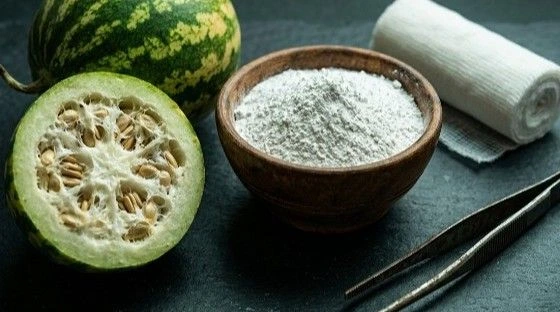
In traditional herbalism, Hanzal (Citrullus colocynthis), also known as Bitter Apple or Kod Tumba, is noted for its strong penetrative properties. It is traditionally observed to assist in the softening of keratinized layers, which may help the core to gradually loosen from the healthy tissue below.
Traditional Application Steps
- Preparation: Slice a small piece of fresh Hanzal fruit (approximate size of a coin).
- Application: Place the pulp side directly onto the foot corn or callus.
- Protection: Secure with surgical tape or a breathable bandage to ensure consistent contact.
- Observation: Repeat daily for 4-5 days. As the tissue softens, the core may naturally begin to detach without forceful intervention.
Post-Application Hygiene
After the corn has softened, maintaining local hygiene is vital. Clean the area thoroughly with a mild antiseptic. To support the skin's recovery phase, traditional practitioners often recommend Sang-e-Jarahat (Talcum Stone).
This mineral, historically used in protective skin powders, helps keep the area dry and clean, providing a moisture-absorbing layer that supports natural skin healing.
Preventive Lifestyle Habits
To support overall skin health and minimize the recurrence of corns, consider these adjustments:
- Monitor internal health through blood purification rituals.
- Adopt a balanced diet to reduce systemic inflammation.
- Ensure footwear is properly fitted to prevent chronic friction points.
Sync Your Internal Health
Skin integrity is often a signal of your body's internal balance. Monitor your cardiac rhythm and vitality markers today.
Check Your BPM NowFrequently Asked Questions
Can foot corns be removed naturally without surgery?
Yes, in traditional medicine, specific botanicals like Hanzal are used to soften the dense keratin buildup (the corn). This process may help the core to gradually loosen and detach over time without the need for invasive procedures.
How long does it take for a corn to soften with traditional methods?
Typically, consistent application of the Hanzal pulp for 4 to 5 days is traditionally observed to assist in softening the corn's layers, though results can vary depending on the corn's depth.
What is Sang-e-Jarahat used for in skin care?
Sang-e-Jarahat (Talcum Stone) is a natural mineral used to keep the skin dry and protected. After removing a corn, it acts as a moisture-absorbing layer to support the natural healing of the skin.
The Full Healing System
This article is a part of our master framework for natural health. For the complete system of heart, gut, and skin vitality, explore our main guide.
← Back to Vitality Blueprint Master Guide